If you’re tuned into the world of food waste, you’ll no doubt have heard about the @food_waste_inspector_ Instagram account. This social media whistle-blower has spent the last few months on a mission to uncover food waste at his local supermarkets – and followers of the account have been equal parts fascinated and furious to see what he’s found.
Who’s the Food Waste Inspector, and what’s he discovered?
The social media detective has been visiting bin stores at nearby supermarkets, and filming his findings as he’s exposed bins full of perfectly good food. He hasn’t just discovered food – in many cases, he’s found items like china mugs, jugs, flowers, and Christmas decorations.
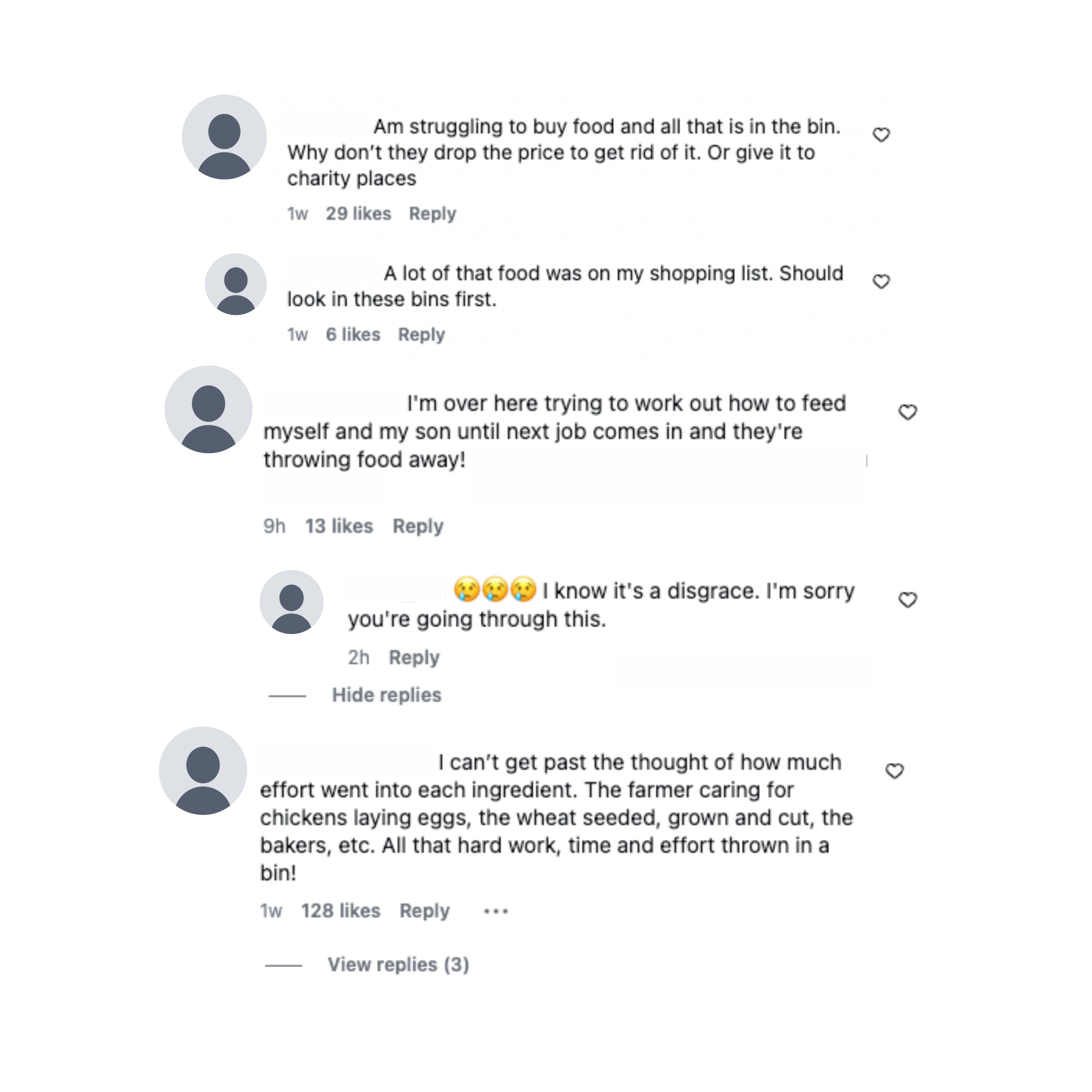
The backlash has been widespread – with many Instagram users expressing anger that while they’re struggling to pay for food, a handful of supermarkets are binning perfectly good food that still within its “use by” or “best before” date:
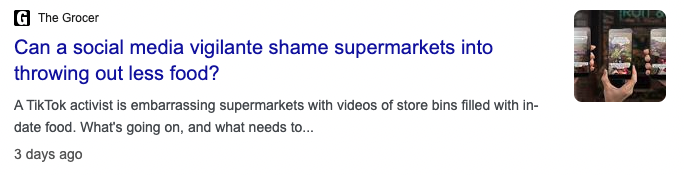
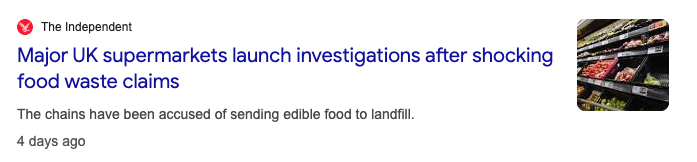
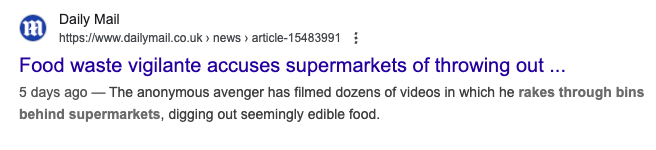
What’s more, media outlets have been keeping a close eye on the Instagram account – publishing updates and putting even more pressure on the supermarkets involved:
So wait – why is perfectly good food ending up in the bin?
First up, it’s worth noting that a lot of retailers are doing a fantastic job at managing their food waste. At Olio, we really believe edible food should never be thrown away – especially when millions of people are going hungry, and food waste accounts for 10% of our global greenhouse gas emissions. It’s never a nice sight to see food in the bin – but there are sometimes explainable reasons that food might end up in bins round the back of a retail store.
It could be that there are processes in place that haven’t been followed by store staff. Equally, it could be down to damaged packaging, or a broken fridge unit that wasn’t caught in time. But while this could explain occasional food waste – it doesn’t quite stack up when looking at the scale (and frequency) of wastage uncovered by @food_waste_inspector_.
In many of the cases exposed by the account, retailers are actually already working with charities to redistribute unsold food. But if there are no charities available on a particular day, food can still end up in the bin.
Layering community redistribution over charity redistribution
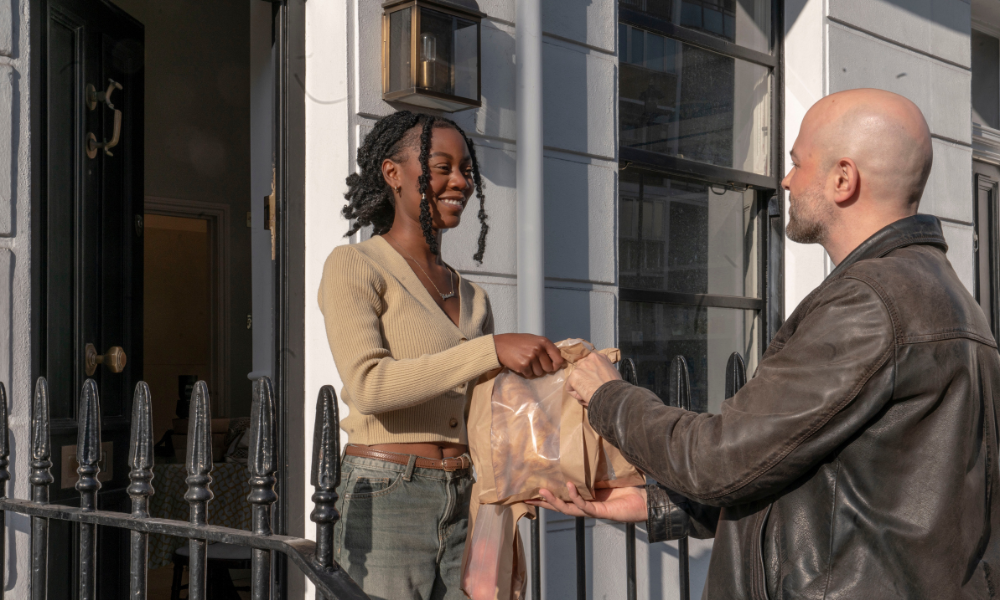
And this is where Olio comes in. As part of our partnerships with some of the UK’s major retailers, wherever possible Olio volunteers step in for charities to rescue food from stores where (or when) there are no charity volunteers available. For example, this could be at stores in more remote locations where there aren’t any charities nearby, when collections are late at night, or during weekends or holidays when charities are often closed.
For any retailer struggling to donate all their surplus to charity, Olio is here to help make sure as little edible surplus goes to waste as possible, and instead feeds local families. You can read more about our surplus redistribution work here – and our volunteers can rescue non-food, too!
What does this all mean, and what needs to change?
At Olio we strongly believe there needs to be a serious shift in attitudes to food waste in the UK – starting with legislation.
There is already innovation happening around redistribution in the retail sector, but we think new laws would drastically accelerate this, making the adoption of more efficient food waste reduction practices more widespread.
In the UK, the Government has explored introducing mandatory food waste reporting for large and medium-sized food businesses. However, despite broad support from industry groups, environmental organisations, MPs and many retailers, this hasn’t yet been enforced (we’re keeping our fingers crossed that might change!).
Internationally, there are examples of successful policy on food waste. France’s Anti-Waste and Circular Economy Law (Loi anti-gaspillage pour une économie circulaire), adopted in 2020, is one of the most ambitious frameworks globally. It includes a ban on the “destruction of unsold edible food by retailers”, backed by significant financial penalties, and requires large food businesses to establish formal partnerships for food donation.
In addition to mandatory food waste reporting, we would love for the UK to start recognising commercial redistributors like Olio alongside traditional non-profit charities in any food redistribution obligations.
This is important because, while the work that charities do is invaluable, they often can’t rescue very short-dated surplus food at scale, limiting the amount of food that can be diverted from waste streams. Hyper-local redistribution models like Olio’s can.
Looking ahead to a future free of food waste
The good news? Olio volunteers already collect unsold surplus from 6 out of the top 10 retailers in the UK, and from more abroad, so all edible surplus can reach bellies – not bins. And if this could truly become the norm, that would be proof that progress really is on the menu.