Food waste innovation inside the NHS: How Guy’s and St Thomas’ NHS Foundation Trust made food redistribution work in a hospital setting
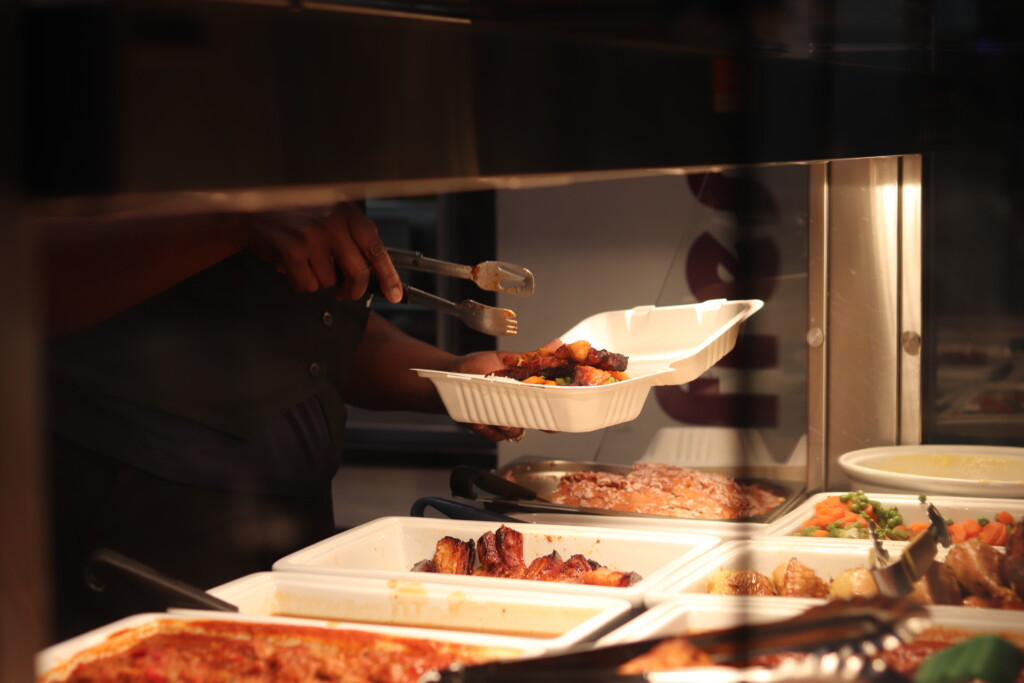
Food waste is a complex challenge in any large organisation. And in hospitals, where patient care, food safety and sustainability must all align, it can feel particularly difficult to solve.
At Guy’s and St Thomas’ NHS Foundation Trust, the team has successfully turned that challenge into an opportunity – streamlining their foodservice operations, driving down waste, and creating community impact through any surplus food left on site each day.
Through a partnership with Olio, Guy’s and St Thomas’ has reduced food waste, and redistributed over 15,000 nutritious meals to the local community – all in just 12 months.
We sat down with Rob Cormack, General Manager, and Dom Agostino, Assistant General Manager, to hear exactly how they did it.
The challenge: Driving down food waste across the hospital premises
Back in 2022, the scale of the issue was clear: the trust was producing 17.5 tonnes of food waste every month. This didn’t sit right with Rob – and he knew something had to change.
A deep dive revealed that nearly 70% of this waste was coming from hospital wards, often due to food being over-ordered “just in case”. In response, Rob brought together a task force to review all waste streams, identify quick wins, and challenge outdated processes.
The results were significant. By 2023, Guy’s and St Thomas’ had reduced food waste to around 10 tonnes per month, meeting a pledge Rob had made to the trust. This was a major operational achievement.

Choosing a partner
In 2024, the trust started looking at surplus food redistribution options, to drive down food waste even further. Before partnering with Olio, Guy’s and St Thomas’ explored a number of options – but most models were built for supermarket or retail surplus, and weren’t suitable for cooked, chilled meals produced in a hospital environment.
“Olio can pick up food on the same day,” Rob explains. “That made all the difference for us.”
With Olio, the catering team saw an opportunity to go beyond waste reduction – to actively give back to the local community while keeping food out of landfill. The trust’s management team quickly got behind the idea.
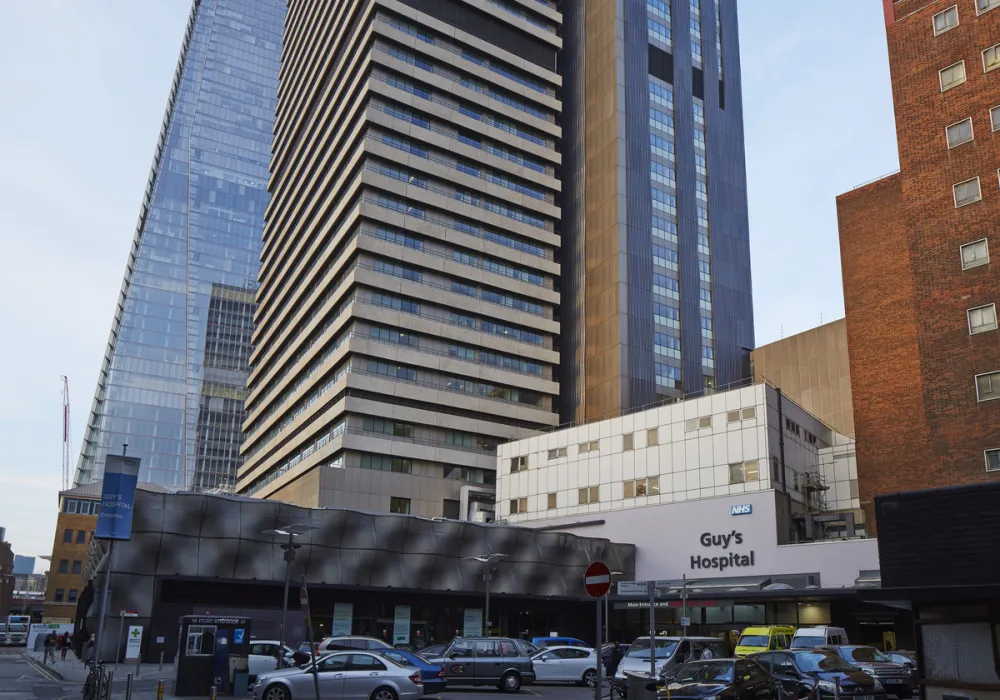
From pilot to a full-scale programme
Implementation was led by Dom, who is closely involved in the operational and logistical elements of the partnership.
A one-month trial launched at St Thomas’ Hospital in early January last year. As with any new system, there were teething issues – but these were quickly smoothed over.
Dom says:
“The first couple of weeks were a learning curve, but after that, everything became smoother and more organised.”
A dedicated collection point was established near where food was being refrigerated, to help with food safety compliance (set up with oversight from the trust’s Food Safety Compliance Officer). Food remains chilled until the point of collection, guaranteeing it is safe and fit for redistribution.
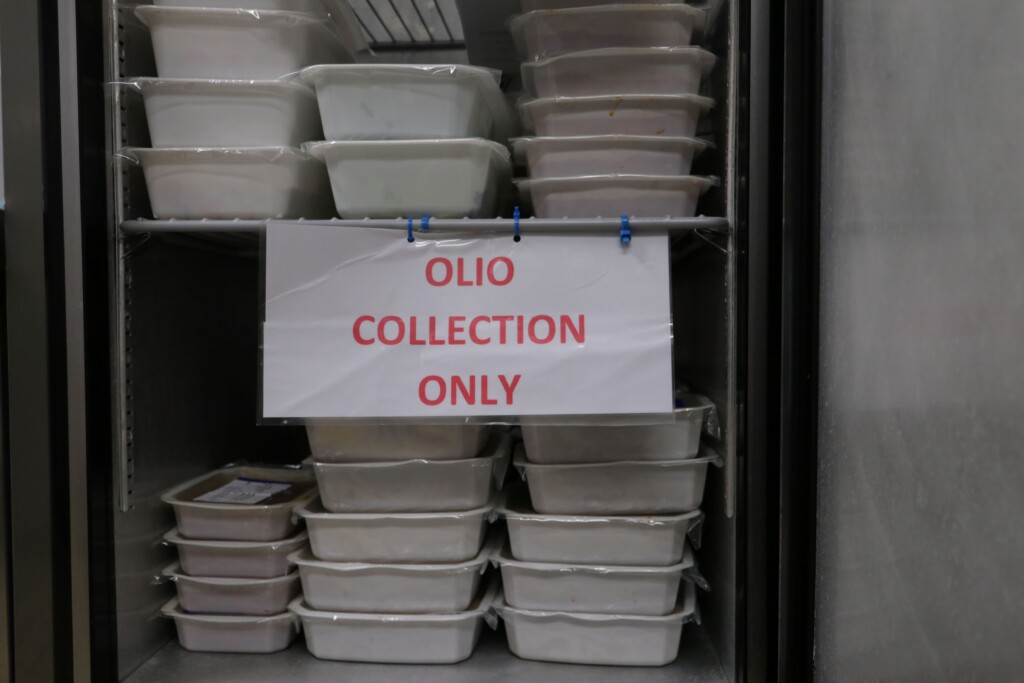
Food remains chilled until collection, guaranteeing it’s safe and fit for redistribution. Olio assumes contractual responsibility for the food once collected by volunteers, removing an extra headache for the trust’s catering and compliance teams.
Success through simple technology and strong relationships
Guy’s and St Thomas’ use Olio’s simple technology to manage their surplus food donations.
“Our teams are busy and constantly on their feet,” Dom explains. “So anything that simplifies a workflow is huge.”
Staff can scan a QR code, tap yes or no on their phone, and request a collection in seconds. Any surplus food is placed in the designated fridge, and local Olio volunteers are alerted via the group chat functionality in Olio’s app.
Over time, a familiar group of three to four regular volunteers has formed – often arriving on foot or by bicycle, keeping additional carbon emissions low. Staff know them by name, and the process feels less transactional and more like a shared mission.
“There’s a real sense of trust and positivity,” says Dom
The flexibility to book additional, one-off collections through Olio’s Collect technology has also been invaluable during busier periods. Volunteers are often able to step in at short notice to collect and redistribute any extra food that needs rescuing.
What the data says: thousands of meals saved (and money saved on waste disposal)
In just over a year, Guy’s and St Thomas’ has redistributed more than 15,000 healthy meals through Olio — around 1,250 meals per month.
For Dom, that impact is deeply personal.
“With the cost of living crisis, we’re seeing more people unable to afford nutritious food. That directly affects community health and hospital admissions. Being able to provide proper meals – that really matters to us.”
From an environmental perspective, the partnership supports the trust’s Green Plan by reducing emissions and lowering the volume of waste through composting and anaerobic digestion. Reduced tonnage also means lower waste disposal costs with external providers.
Starting a food waste revolution across the NHS
Rob has already begun sharing Guy’s and St Thomas’ experience with other NHS trusts, including through Exemplar Trust forums.
“There can be nervousness around food safety,” he acknowledges. “But my advice is simple: talk through what’s required, and give it a try.”
Dom agrees.
“It’s a win for the environment, the community, and the NHS. Once you see the impact — it’s hard not to care.”