Starting uni is exciting, a little terrifying, and (let’s be honest) more expensive than anyone warns you. New city, new people, first time managing your own money: it’s A LOT to figure out at once.
Alas! A few smart moves can save you hundreds of pounds and a whole lot of stress. Here are 11 things worth knowing about, so you can manage your money more effectively and have more left over for the fun stuff 🕺
1. Money might be tighter than you expect (and that’s normal)
Sorry to start with the harsh truth, but being a student can be financially stressful. The average student spends around £1,142 a month (in London it’s closer to £1,269), while the average maintenance loan works out at about £640 a month. That’s a gap of roughly £500 a month, according to Save the Student’s 2025 Money Survey.
Most students bridge the gap with a mix of part-time work, family help, and savings. Around 58% have a part-time job, but earnings from that still might not be enough to cover the gap.
And if you’re an EU or international student, you usually can’t get a maintenance loan, so you’ll be covering your living costs yourself. Worth planning for early.
None of this is meant to scare you. Knowing the numbers before term starts turns budgeting into a plan rather than a panic 💪
2. Open a student bank account
Opening a student specific bank account can be a massive financial help. A student bank account gives you an interest-free overdraft, which you can use when the loan runs low (as long as you pay it back before you graduate).
An overdraft is a safety net that lets you spend a bit more than you actually have, up to an agreed limit, and a student account makes that borrowing interest-free.
One tip: compare the guaranteed overdraft, not the headline figure. Some banks advertise a big number but only offer a fraction of it in year one.
A few of the strongest accounts for 2026/27, according to MoneySavingExpert:
💚 Santander Edge Student: £1,500 guaranteed 0% overdraft, plus a free 4-year 16-25 Railcard (worth around £115)
💚 Nationwide FlexStudent: up to £3,000 by year 3, plus £100 cash or Just Eat vouchers
💚 NatWest: £100 cash and a 4-year Tastecard
💚 Lloyds: £100 cash and Deliveroo vouchers
Pick based on the overdraft limit and the perks you’ll actually use, not just the free cash.
3. Grab a 16-25 Railcard
If you’ll be getting trains home, to see friends, or for placements, a 16-25 Railcard is a no-brainer. It costs £35 for the year and gets you a third off rail travel, with the average holder saving around £212 a year .
Studying in London? An 18+ Student Oyster photocard gets you 30% off adult-rate Travelcards and Bus & Tram season tickets, so it’s well worth getting.
Some student bank accounts even offer a free railcard, which is a double win 🙌
4. Get free food on Olio
Food is one of your biggest costs after rent, and it’s where you can save the most. In fact, 61% of students told Save the Student they skip meals to save money, which is exactly the kind of thing we’re on a mission to fix.
Olio is a free app that connects you to free food from your neighbours and local shops. Supermarkets like Tesco and cafés like Pret share their unsold food on Olio at the end of the day, and you can pick it up for FREE. Seriously 😎
Don’t believe us? Here’s a food haul an Olio user shared on their TikTok:
It’s simple to use:
✅ Browse the free food listed near you
✅ Request whatever you fancy
✅ Pop out and collect it at an agreed time
More than 9 million people have downloaded Olio and every month, more than £6 million worth of free food is given away 😱
“I started using Olio at Uni. Every week I’d get free Pret food, and now I rescue food from Tesco. I love saving money and food at the same time.” Rebekah from University of Birmingham
Want to take it further? You can sign up as a Food Waste Hero and volunteer to collect surplus food from local businesses yourself. You keep some, share the rest with your community, and it looks brilliant on a CV too 💚
5. Learn a few cheap meals that freeze well
Free and discounted food is only half the story. Knowing what to do with it is what keeps your food bill low all term.
You don’t need to be a chef. A handful of simple, filling recipes will carry you a long way, especially ones you can batch cook and freeze for the nights you can’t be bothered to cook.
A few things that make a big difference:
✅ Cook once, eat twice: make a big pot of chilli, curry, or pasta sauce and freeze portions
✅ Shop own-brand for basics like rice, pasta, tins, and frozen veg
✅ Grab the yellow-sticker reduced items at the supermarket (usually late afternoon or evening)
✅ Keep a few staple recipes you can make with your eyes closed
✅ For cheap recipe inspiration, Miguel Barclay’s One Pound Meals and Jack Monroe’s Cooking on a Bootstrap are both student favourites, and BBC Good Food has loads of free budget recipes too.
We’ve also got a whole guide to cheap student meals that batch cook and freeze brilliantly if you want a head start 🍅
6. Always, always check for discounts
Being a student unlocks discounts almost everywhere, from clothes and tech to food and travel. The trick is checking before you buy, because a 10-20% saving quickly adds up over a year.
Start with these:
✅ UNiDAYS and Student Beans: both free, and used by most big retailers to verify you’re a student
✅ TOTUM: a student discount card with a free tier plus paid options
Plus loads of other great deals like Amazon Prime Student (6-month free trial), Spotify (around 45% off), and in-store deals at places like Boots, Co-op, and Greggs.
7. Enjoy the nights out (without blowing the budget)
Freshers’ isn’t complete without a few big nights, and student life is built to keep them affordable. On average, students spend around £61 a month on going out.
Your Students’ Union bar is almost always the best-value spot in town: low prices and events made for students. Most cities also run dedicated student nights midweek, with discounted entry and drinks deals.
A few ways to keep the fun affordable:
✅ Use your TOTUM, Student Beans, or UNiDAYS for discounts at bars, restaurants, and cinemas
✅ Set a night-out budget and take cash, so you don’t wake up to a scary bank balance
✅ Join society socials, which are often subsidised and a brilliant way to meet people
8. Get to know the Happy Student app
Some of the best student tools come from people who’ve lived the problem themselves, and Happy Student is a great example. Its founder moved from Turkey to study in the UK and quickly realised that getting here was the easy part. From housing and healthcare to culture shock, he hit the gaps in support that many students face, so he built the app he wished he’d had.
It’s free, backed by the Mayor of London, and now used across more than 100 universities. It pulls the tricky settling-in tasks into one place: help registering with a GP, sorting your accommodation, finding your community, and getting to grips with transport and healthcare in a new city.
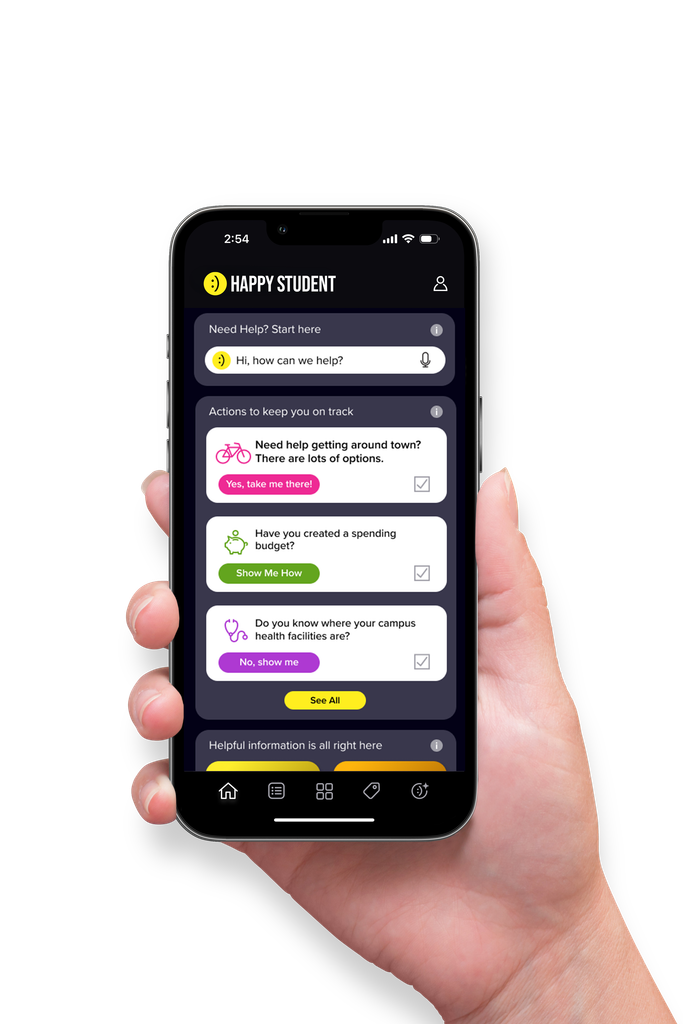
If you’re moving to the UK from abroad, it’s a brilliant place to start, so you’re not figuring everything out on your own.
9. Know where to look for information
There are some great resources out there that can help you navigate the student experience and any money questions you might have.
Save the Student: the go-to for budgeting guides, the best bank accounts, and advice on student finance
MoneySavingExpert: unbeatable on bank accounts, bills, and every money question you’ll ever have
The Student Room: the UK’s biggest student forum, great for course questions, accommodation worries, and freshers’ nerves
Bookmark them now, thank yourself later.
10. Learn about what support is available through your university
Your university offers a lot of free help, and loads of students never use it.
Most unis have a hardship fund: money (often a grant you don’t pay back) for students who are struggling financially. If money gets tight, ask your student services team what’s available. It’s there for exactly this reason.
While you’re at it, get to know your Students’ Union for free advice on money, housing, and coursework, plus societies and part-time jobs. And if you’re ever feeling overwhelmed, your uni’s wellbeing and counselling service is free and confidential.
Asking for help early is one of the smartest money moves you’ll make at uni 🙌
11. Sort your council tax
It’s an admin task, but this one can save you a good chunk of money. Full-time students are exempt from council tax.
If you live in halls, it’s usually sorted automatically. But if you’re renting a private or shared house, you’ll often need to send your council a student certificate (your uni can provide one) to claim the exemption. If you live with non-students the rules are a bit different, so it’s worth checking with your local council.
You’ve got this 💪
Nobody arrives at uni with money completely figured out, and you don’t need to either. Sort your bank account, grab a railcard, download Olio for free food, and learn a couple of freezer-friendly meals, and you’re already ahead of the game.
Then you can spend less time worrying about money, and more time enjoying the best bits of student life 💚